
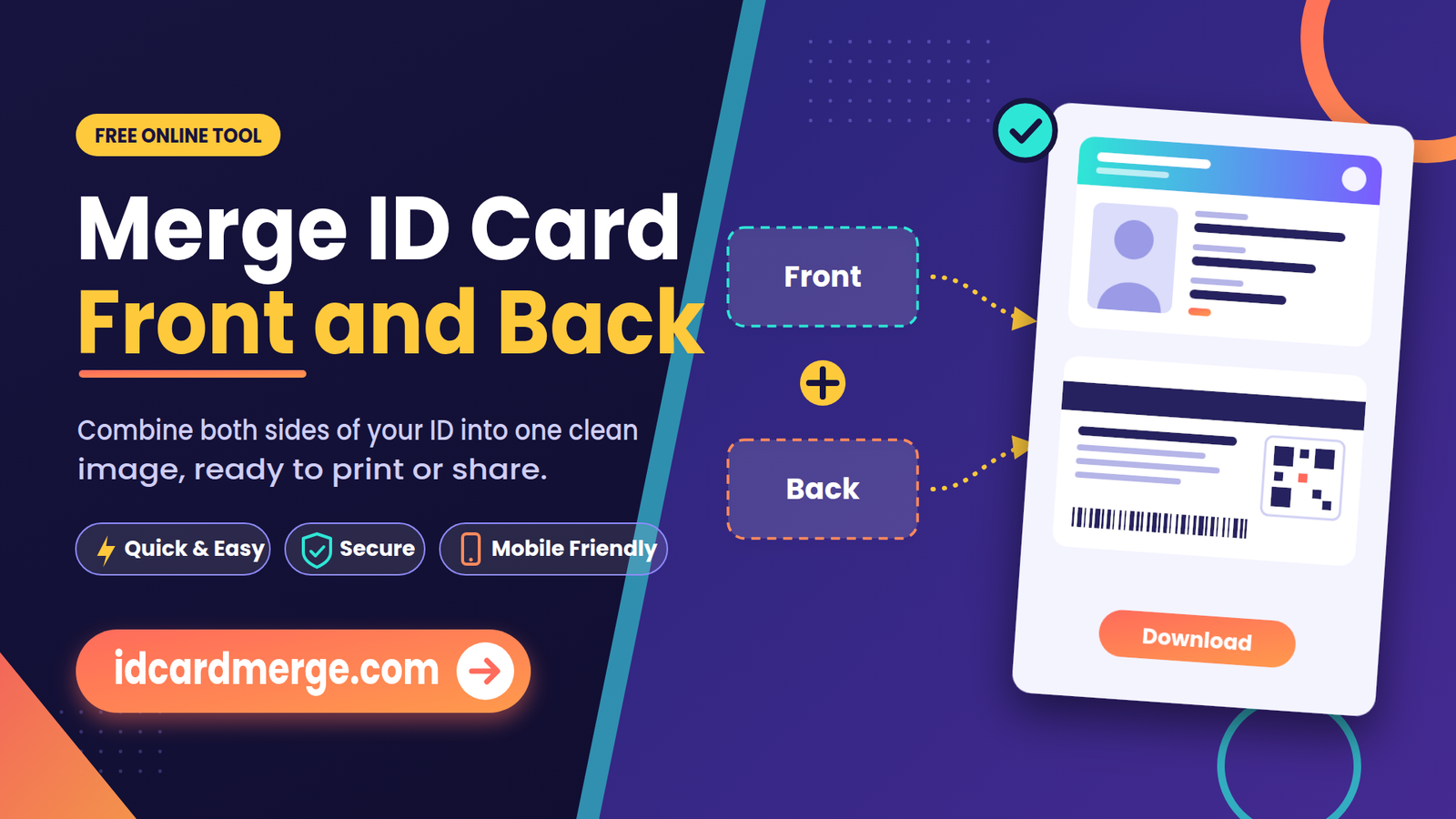
Merge CNIC front and back online into one image or PDF. Combine both sides of you are Pakistani ID card on one page for easy printing and uploading.
Banks and visa offices, employers and online application portals may ask for both sides of you are CNIC in a single file. But your phone saves the front and back as two separate photos and the upload form may accept only one attachment.
This free online CNIC merging tool helps you put both sides together on one page without complicated editing software. Choose the front and back images, check to the preview and download the combined file in a suitable format.
Whether you need a CNIC copy for a job application, office paperwork or online registration, merging both sides makes your document easier to organize and submit.
Merge CNIC Front and Back Online – Combine Both Sides into One Image or PDF
What does it mean to merge CNIC front and back?
Merging the front and back of a CNIC means placing two separate images of your Pakistani Computerized National Identity Card into one image or document.
You can arrange the front above the back or place both sides next to each other, depending on the available layout options. The result is one combined file that is easier to upload, email or print.
For example, if an online form has only one field for your CNIC, you can prepare a single file containing both sides instead of attaching two separate pictures.
How to merge CNIC front and back online
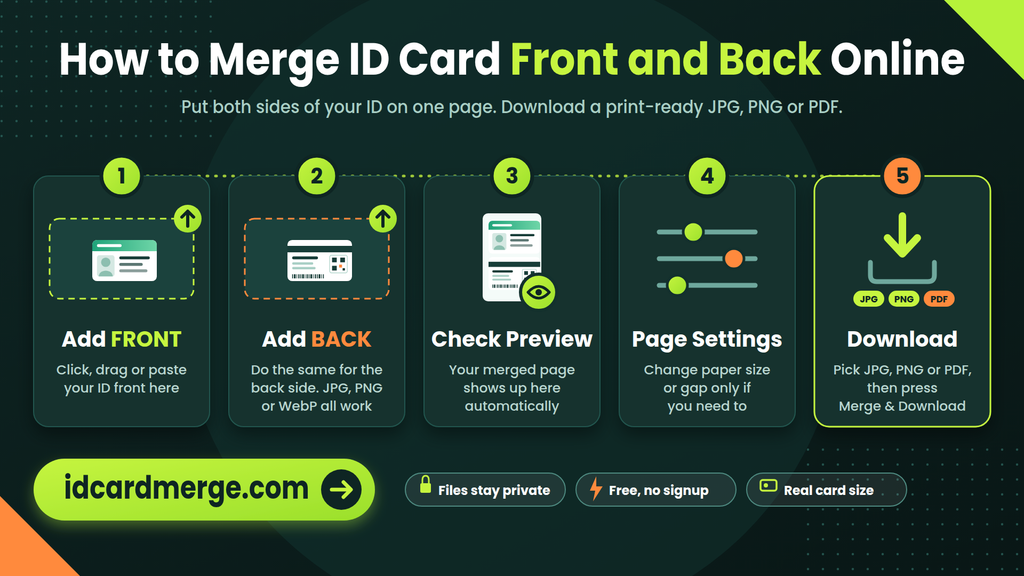
Follow these simple steps to prepare your combined CNIC file.
- Add the front image. Open the CNIC merging tool and select the photo or scan of the front side of your card.
- Add the back image. Select the image showing the reverse side of your CNIC.
- Check the preview. Make sure both sides appear correctly and all important details are visible.
- Choose your layout. If the tool offers layout settings, select front above back or side by side.
- Adjust the settings. Change the spacing, page size or card size if those options are available and needed.
- Choose the output format. Select JPG, PNG or PDF according to the receiving website’s requirements and the tool’s supported options.
- Download your file. Save the merged CNIC and open it once to confirm that both sides are clear and complete.
Helpful tip: If the front and back appear in the wrong order, use a swap option if the tool provides one. You may not need to upload both images again.
What you can change in Page settings
Page settings help you prepare the merged CNIC for printing or digital submission. The exact options depend on the tool you use.
- Card type: Select the appropriate card type if a matching frame is available.
- Paper size: Choose A4, Letter, A5 or another supported size when needed.
- Card size: Use actual card dimensions for a true-size print or a larger layout when the recipient requires it.
- Gap between images: Add space between the front and back to make the page easier to read.
- Watermark: Add a short note describing the intended purpose of the copy, if supported.
- Cut border: Use a trimming guide if the tool provides one.
- Merge layout: Place the two sides vertically or horizontally when the option is available.
You do not need to adjust every setting for a simple upload. The default layout may be sufficient if it produces a clear image that meets the submission requirements.
Why real CNIC card size matters
A standard ID-1 card measures 85.6 × 54 mm, approximately the size of a typical bank card. This is a useful reference when preparing a CNIC copy for printing.
Keeping the correct proportions helps prevent the card from looking stretched or distorted. However, the final printed size also depends on the layout, export settings and printer settings.
If you need a true-size copy, select the appropriate card-size option if available. When printing, check that options such as “Fit to page” have not unintentionally enlarged or reduced the card.
For online submission, follow the receiving organization’s instructions. It may require a particular image size or a full-page scan rather than a card printed at its original dimensions.
Which ID cards can you merge?
A tool that combines two images can generally be used for many types of two-sided identification documents, provided the images are supported.
Examples include:
- Pakistani CNIC and Smart CNIC
- National identity cards
- Driving licences
- Student and employee ID cards
- Residence permits
- Membership cards
- Other two-sided identification documents
Some tools may also support Aadhaar, PAN cards or other country-specific documents. Check the available upload and layout options before using the tool.
Is it safe to merge a CNIC online?
Your CNIC contains sensitive personal information, including your photograph, identity number and other details. It is sensible to check how an online tool handles your files before using it.
If a tool processes images entirely inside your browser, the images do not need to be uploaded to its server for merging. However, do not assume this applies to every website without checking its privacy information and processing method.
For better privacy:
- Use a trusted website and review its privacy policy.
- Check whether image processing happens locally or requires uploading files.
- Avoid processing sensitive documents on shared or public computers.
- Do not share the finished CNIC file with people who do not need it.
- Delete unnecessary copies from shared devices after use.
A watermark can indicate the purpose of a document copy, but it does not guarantee protection against misuse. Make sure any watermark does not cover important details or violate the recipient’s requirements.
Tips for a clear CNIC image
A good merged document starts with clear original images. Follow these tips before combining your CNIC photos.
- Use good lighting: Avoid dark shadows and glare from the card’s surface.
- Keep the card flat: Place it on a plain background for easier photography.
- Capture the whole card: Keep all four corners visible and avoid cutting off any information.
- Hold your phone straight: Photograph the card from directly above to reduce distortion.
- Check both sides: Make sure the front and back images are assigned correctly.
- Avoid excessive compression: A smaller file is useful, but text and numbers must remain readable.
- Review the final preview: Zoom in before downloading to check the card details.
If the original photo is blurry, take a new picture whenever possible. Combining two unclear images will not restore missing details.
Add a watermark before you share
If you need to send your CNIC copy to a particular organization, a purpose-specific watermark may help show how the copy is intended to be used.
For example, you might use wording such as “For employment verification only” or “For bank documentation only,” provided the recipient allows watermarked copies.
If your tool includes a watermark option, enter a short message and check the preview before downloading. Keep the text away from important card details.
Some organizations require an unmarked copy, so always check their instructions first. A watermark is a precaution, not a guarantee that your identity document cannot be misused.
JPG, PNG or PDF: which one should you choose?
The right format depends on the upload requirements and how you plan to use your merged CNIC.
- JPG: Choose JPG when an online form accepts images and you want a relatively small file. Avoid excessive compression because it can make text harder to read.
- PNG: Choose PNG when you want to preserve image details without lossy compression. The file may be larger than a JPG.
- PDF: Choose PDF when an organization requests a document or when you want a convenient file for printing. The final page size depends on the export settings.
Before downloading, check the permitted file types and maximum file size on the destination website. A clear, correctly formatted file is more useful than one that simply has the smallest size.
Final Thoughts
Merging CNIC front and back online is a practical way to prepare both sides of your Pakistani identity card in one file. It can save time when an application accepts only one attachment or when you need a combined copy for printing.
Start with clear images, choose a suitable layout and export format, and review the final result before submitting it. Most importantly, follow the recipient’s requirements and handle your CNIC information carefully.
With the right tool and a few simple steps, preparing a clear, organized CNIC copy becomes much easier.
FAQs About Merge CNIC Front and Back Online
Can I merge CNIC front and back online for free?
You can use an online CNIC merging tool to combine both images into one file. Check the tool page for its current pricing, available features and any usage limits.
Can I merge both sides of my CNIC on my mobile phone?
Yes. You can prepare the front and back images on an Android phone or iPhone and use a compatible browser-based tool. Review the preview before saving the final file.
How do I combine CNIC front and back into one PDF?
Add both images to a tool that supports PDF export, arrange them in the required layout and download the resulting PDF. Confirm that the receiving organization accepts the file and page format.
Which image formats can I upload?
Supported formats depend on the tool. Many image-merging tools accept JPG and PNG, while some also support WebP or other formats. Check the upload instructions on the tool page.
Is it safe to upload my CNIC to an online merging tool?
Privacy depends on how the website processes and handles your images. Review its privacy policy and determine whether files are processed locally in your browser or uploaded to a server before using it.
Can I print my merged CNIC at its actual size?
Yes, if the tool supports the appropriate card dimensions and export settings. When printing, check the scale settings and disable automatic resizing if you need the original physical dimensions.
Can I place the CNIC front and back side by side?
Yes, if the tool offers a horizontal layout. Otherwise, a vertical layout with the front above the back is a practical alternative.